UBC has a number of Indigenous faculty members across disciplines at the Vancouver campus. These faculty members are actively involved in research, teaching, or administration, much of it with an Indigenous focus and substantial community engagement.
See also: Indigenous-focused programs at UBC
Faculty of Applied Science
Faculty of Arts
Faculty of Education
Faculty of Forestry & Environmental Stewardship
Faculty of Land and Food Systems
Faculty of Medicine
Faculty of Science
Peter A. Allard School of Law
UBC Library
Indian Residential School History and Dialogue Centre
Faculty of Applied Science
 Dr Jessica Barudin
Assistant Professor, School of Community and Regional Planning
Dr Barudin is Kwakwaka’wakw and a member and elected leader of the ‘Namgis First Nation. She believes in a values-driven, relationship-centered approach to community planning. Jessica is especially interested in supporting community-led processes with Indigenous communities that center on language revitalization pathways as well as holistic approaches to wellness. Her personal research interests lie at the intersection of planning and Indigenous health, trauma theory and embodied practices, and restoring traditional knowledge systems across generations, and cultures, as well as beyond our more than human relatives.
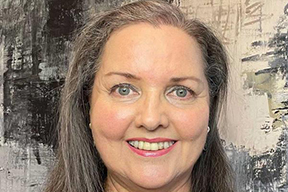 Dr Leanne M. Currie
Associate Professor, School of Nursing
Dr Currie is a researcher in the field of nursing and biomedical informatics. Her methods include using a sociotechnical approach to system development, including user interface design, workflow analysis, and use of data science and AI methods. She is a member of the Métis Nation of BC, and co-chair of the School of Nursing Indigenous Cultural Safety committee. She is co-lead of the Graduate Certificate in Clinical informatics in the School of Nursing.

Dr Maggie Low
Assistant Professor, School of Community and Regional Planning
Dr Low, a status member of Wikwemikoong Unceded Territory, is the Co-Chair of the Indigenous Community Planning (ICP) program at SCARP. She seeks to advance a better understanding of Indigenous sovereignty as it is expressed outside the Canadian courts, with a focus on the implications of these expressions for the well-being of Indigenous communities. She also seeks to showcase the strength and strategies of Indigenous Nations and communities as they assert authority over their territories and work towards a renewed relationship with non-Indigenous Canadians.

Dr Scott Ramsay
Assistant Professor, School of Nursing
Scott Ramsay, PhD, RN, is a member of Métis Nation BC. He has a strong clinical background, having worked at BC Children’s Hospital for over a decade, where he also leads the Indigenous Child Health Knowledge Super Hub with Dr & Elder Roberta Price at the BCCH Research Institute. Dr. Ramsay’s program of research focuses on health equity research on neurotrauma (HERON) in children and adolescents in British Columbia. His approach to research involves community (e.g., partner with the Provincial Community Brain Injury Program for Children and Youth) and is based on his own lived experience having suffered 5 concussions and persistent symptoms as a high-level hockey player. Dr. Ramsay welcomes students and collaborations from equity-deserving groups.
Faculty of Arts
 Dr Billy-Ray Belcourt
Associate Professor, School of Creative Writing
Billy-Ray Belcourt is from the Driftpile Cree Nation. He holds a Ph.D. in English from the University of Alberta and has been both a Rhodes Scholar and a PE Trudeau Foundation Scholar. He is the author of This Wound is a World (Frontenac House 2017), winner of the 2018 Canadian Griffin Poetry Prize, NDN Coping Mechanisms: Notes from the Field (House of Anansi Press 2019), longlisted for Canada Reads 2020, and A History of My Brief Body (Hamish Hamilton 2020), finalist for the 2020 Governor General’s Literary Award for Non-Fiction.

Dr Candis Callison
Professor, Institute for Critical Indigenous Studies & School of Public Policy; Associate Faculty, School of Journalism, Writing, and Media; Canada Research Chair in Indigenous Journalism, Media, and Public Discourse
Dr Callison (M.Sc., Ph.D. MIT) is the author of How Climate Change Comes to Matter: The Communal Life of Facts (Duke University Press, 2014), and co-author of Reckoning: Journalism’s Limits and Possibilities (Oxford University Press, 2020). Her research and teaching focus on changes to media practices, the rise and persistence of Indigenous journalism on digital platforms, journalism ethics, the role of Indigenous and environment-focused social movements in public discourse, and understanding how climate change becomes meaningful for diverse publics. She is a member of the Tahltan Nation.

Dr T. Patrick Carrabré
Professor, School of Music; Director, Chan Centre for the Performing Arts
T. Patrick (Pat) Carrabré has been active as a composer, administrator, educator, radio host and conductor. Among other pursuits, creating shared musical spaces with Indigenous and non-western musicians has been a significant theme of his work and since the dawn of the Truth and Reconciliation era, this has led to a number of works confronting issues of decolonization, frequently using deconstructionist techniques. His other interests have included the exploration of his Métis heritage, use of interactive electronics, and editorial work.

Ms Dana Claxton
Professor, Art History, Visual Art and Theory
Dana Claxton was born in Yorkton, Saskatchewan, and her family reserve is Lakota First Nations – Wood Mountain, located in southwest Saskatchewan. She works in film, video, photography, single- and multi-channel video installation, and performance art. Her practice investigates beauty, the body, the socio-political, and the spiritual.
 Dr Glen Coulthard
Associate Professor, First Nations and Indigenous Studies & Political Science; Director, Institute for Critical Indigenous Studies
Glen Coulthard is Yellowknives Dene and an associate professor in the First Nations and Indigenous Studies Program and the Department of Political Science. He is the author of Red Skin, White Masks: Rejecting the Colonial Politics of Recognition (Minneapolis: University of Minnesota Press, 2014), winner of the 2016 Caribbean Philosophical Association’s Frantz Fanon Award for Outstanding Book, the Canadian Political Science Association’s CB Macpherson Award for Best Book in Political Theory, published in English or French, in 2014/2015, and the Rik Davidson Studies in Political Economy Award for Best Book in 2016. He is also a co-founder of Dechinta Centre for Research and Learning, a decolonial, Indigenous land-based post-secondary program operating on his traditional territories in Denendeh (Northwest Territories).

Dr. Phurwa Dondrub Dolpopa
Assistant Professor, Geography
Dr. Phurwa Dondrub Dolpopa is a geographer and political ecologist from the Dolpopa Indigenous community in Nepal. He has conducted research on wildlife conservation and state formation, Indigenous knowledge and environmental governance, road building and infrastructure development, dynamics of agropastoral lives, and multispecies and more-than-human geographies in the high Himalayas. His community-engaged works include a systematic documentation of Dolpopa oral literature as well as making ethnographic films on Indigenous ritual traditions and state administration of everyday lives among his people. He primarily employs qualitative methods that are grounded in ethnographic, embodied, multimodal, and collaborative approaches to producing and mobilizing knowledge. His works have been supported by the Social Science Research Council, the Wenner-Gren Foundation, the American Philosophical Society, the Firebird Foundation, and the National Geographic Society.

Mr Larry Grant
Adjunct Professor, First Nations and Endangered Languages Program
Elder Larry Grant (sʔəyəɬəq) is an Adjunct Professor in the First Nations and Endangered Languages Program and Musqueam cultural consultant.
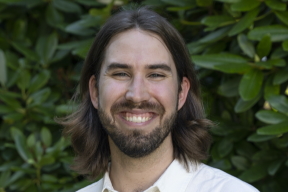
Dr Christopher Hammerly
Assistant Professor, Department of Linguistics; Director, Experimental Linguistics and Fieldwork Lab
Dr. Hammerly has mixed Anishinaabe-Norwegian ancestry and is a descendent of the White Earth Nation of Minnesota. His work focuses on how emerging technologies and experimental methods can be used to enhance language documentation, informing both (psycho) linguistic theory and language revitalization efforts.

Dr Dallas Hunt
Assistant Professor, Department of English Language and Literatures
Dallas Hunt is Cree and a member of Wapsewsipi (Swan River First Nation) in Treaty 8 territory in Northern Alberta. He has had creative and critical work published in the Malahat Review, Arc Poetry, Canadian Literature, Settler Colonial Studies, and the American Indian Culture and Research Journal. His children’s book, Awâsis and the World-Famous Bannock, was published through Highwater Press in 2018, and his first collection of poetry, CREELAND, was published in 2021. Dallas’ newest book, Teeth, was published in Spring of 2024.
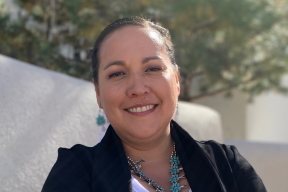
Dr Kimberly Huyser
Associate Professor, Department of Sociology
Dr Huyser is an enrolled member of the Navajo Nation. The aim of her research agenda is to gain a deeper understanding of the social conditions that undermine health, as well as to identify the cultural and social resources leveraged by racial and ethnic groups in order to further their individual and collective health and well-being. Her research furthers our understanding of the social determinants of health problems faced by Indigenous peoples and our comprehension of the social mechanisms that undergird population health.

Dr Daniel Heath Justice
Professor, English & First Nations and Indigenous Studies
Daniel Heath Justice is an enrolled citizen of the Cherokee Nation, born and raised in Colorado. He is a Full Professor and Distinguished University Scholar in the Institute for Critical Indigenous Studies and Department of English Languages and Literatures. His work in Indigenous cultural and literary studies takes up questions and issues of nationhood, kinship, and belonging, with increasing attention to the intersections between Indigenous literatures, speculative fiction, and other-than-human peoples. He is the author of several books, the two most recent being Raccoon. Animal Series, ed. Jonathan Burt (London: Reaktion, 2021) and Why Indigenous Literatures Matter (Waterloo, ON: Wilfrid Laurier UP, 2018).

Dr Aynur Kadir
Assistant Professor, Department of Asian Studies & First Nations and Endangered Languages Program
Aynur Kadir is an Indigenous Uyghur scholar, filmmaker and curator with a research focus on the documentation, conservation and revitalization of Indigenous cultures and languages. Her work bridges the gap between Indigenous studies in Canada and in Asia. Her research interests are in global indigeneity from the Uyghur in China to Coast Salish and Six Nations in Canada; transnational Indigenous diplomacy; and the safeguarding and revitalization of languages and cultural heritage through digital technology and collaborative initiatives. She is the recipient of several grants, including from the Social Sciences and Humanities Research Council of Canada (SSHRC).
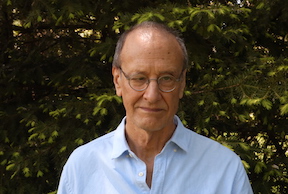
Dr Linc Kesler
Professor Emeritus, English & First Nations and Indigenous Studies
Dr Kesler’s Indigenous ancestry is Oglala Lakota. He was the first director of the First Nations Studies Program (2003-09), and served as director of the First Nations House of Learning and Senior Advisor to the President on Aboriginal Affairs from 2009-18. His research focused on the relationship between technological change and the representation of knowledge, a topic vital to strategizing the survival of Indigenous communities, and in developing uses of emerging technologies to serve the needs of Indigenous communities. He retired from teaching in 2023.

Frances Koncan
Assistant Professor, School of Creative Writing
Frances Koncan (they/them) is an Anishinaabe and Slovene writer and theatre artist from Couchiching First Nation. They grew up in Treaty 1 territory on the land currently known as Winnipeg, Manitoba, and hold a BA in Psychology from the University of Manitoba and an MFA in Playwriting from the City University of New York Brooklyn College. Plays include: Space Girl, Women of the Fur Trade, and zahgidiwin/love.

Dr Lindsay Lachance
Assistant Professor, Theatre Studies
Dr Lachance, who is from an Algonquin Anishinaabe family, played a leading role in the direction of the Indigenous Theatre department at the National Arts Centre as the first Artistic Associate. She earned her PhD in Theatre from the University of British Columbia and, in January 2018, successfully defended her dissertation titled “The Embodied Politics of Relational Indigenous Dramaturgies.” Lindsay’s academic work exists at the intersections of Indigenous Theatre and Critical Indigenous Studies, where she celebrates and supports Indigenous theatre theory and dramaturgical structures.
 Dr Tricia Logan
Assistant Professor, School of Public Policy and Global Affairs & Institute for Critical Indigenous Studies
Dr Tricia Logan is a Métis scholar with more than 20 years of experience working with Indigenous communities and residential school survivors in Canada. She has held roles at the National Centre for Truth and Reconciliation, the Canadian Museum for Human Rights, the Métis Centre at the National Aboriginal Health Organization, the Aboriginal Healing Foundation and the Legacy of Hope Foundation. Her research interests include residential schools, genocide and settler colonialism. She also served as Interim Academic Director of the Indian Residential School History and Dialogue Centre.

Dr Charles R. Menzies
Professor, Anthropology
Professor hagwil hayetsk’s (Charles Menzies) primary research interests are the production of anthropological films, natural resource management (primarily fisheries related), political economy, contemporary First Nations’ issues, maritime anthropology and the archaeology of north coast BC. His current research project, Laxyuup Gitxaaɫa, combines archaeological and socio-cultural anthropology to document the traditional territory of Gitxaaɫa Nation. Other projects include founding and directing the Ethnographic Film Unit at UBC, establishing an online journal, New Proposals, and acting as the coordinator of an ecological anthropology research group at UBC, Forests and Oceans for the Future. Hagwil hayetsk is a member of Gitxaała Nation on BC’s north coast and an enrolled member of the Tlingit and Haida Tribes of Alaska.

Dr Harpell Montgomery
Associate Professor, School of Social Work
Dr Montgomery, who is of Irish-Canadian and Mi’kmaq ancestry, has graduate degrees in Social Work (MSW – UVic) and Education (PhD – USask), and since 2003 has taught numerous undergrad and graduate level courses at UVic and URegina. He has held leadership positions with First Nations child and family serving organizations in Saskatchewan and BC, including undertaking social welfare policy development for First Nations and provincial governments and planning, developing and administering First Nations social development, post-secondary education and child welfare programs. He joined the School of Social Work in August 2020.

Dr Dory Nason
Associate Professor of Teaching, First Nations and Indigenous Studies & Institute for Gender, Race, Sexuality and Social Justice
Dory Nason (Ph.D. University of California, Berkeley) is Anishinaabe and an enrolled member of the Leech Lake Band of the Minnesota Chippewa Tribe. Her areas of research include contemporary Indigenous Feminisms and related Native women’s intellectual history and literature. Professor Nason teaches Indigenous Literature and Criticism; Indigenous Theory and Research Methods; and Indigenous Feminisms. Specializing in Indigenous feminism and literature, Dory holds a joint position with the Institute for Gender, Race, Sexuality and Social Justice. In 2013, she was awarded a prestigious Killam Teaching Prize in recognition of her contributions to teaching excellence at UBC. She and Dr. Glen Coulthard were featured contributors to the groundbreaking anthology, The Winter We Danced: Voices from the Past, the Future, and the Idle No More Movement (ARP Books, 2014).

Ms Marie Nightbird
Assistant Professor of Teaching, School of Social Work; Indigenous Program Committee Chair
Marie is a social worker, counsellor and educator and is of Saulteaux, Sioux and Ukrainian ancestry from Treaty 4 lands in Saskatchewan. She joined the School of Social Work as an Assistant Professor of Teaching in the Educational Leadership Stream in July 2018. She teaches in the BSW and MSW programs in Indigenous focused courses, interpersonal communication skills, group work skills and integrative seminars for field placements. She is the Indigenous student advisor and is active in Indigenous initiatives to further reconciliation, Indigenization and decolonization in the School of Social Work. In 2024, Marie was promoted to Associate Professor of Teaching. Her areas of scholarship and practice include Indigenous healing and wellness, violence against women, and clinical social work.
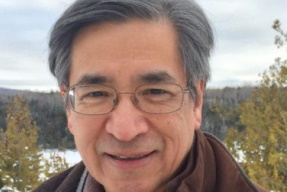
Dr Bernard Perley
Professor, Institute for Critical Indigenous Studies
Bernard C. Perley is Maliseet from Tobique First Nation, New Brunswick (PhD, Social Anthropology, Harvard). His academic training is interdisciplinary and aims to transcend disciplinary boundaries to serve his commitment to Indigenous community-based research and advocacy. Bernard is an activist/advocate Indigenous anthropologist. His professional contributions to the American Anthropological Association include: Core Member/Member of the Task Group on Language and Social Justice (since 2010), Minority seat representative on the AAA Executive Board (2013-2017), Ombudsperson (2018-2020), and President of the Society for Linguistic Anthropology (2021-2023). He is also current President of the Canadian Anthropology Society (CASCA). His language research and advocacy continue to be expressed through publications and professional conferences as well as community-based projects such as collaborative art installation pieces, keynote presentations, and language revitalization workshops.
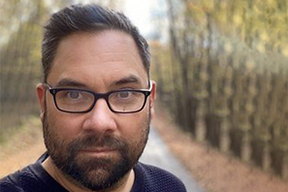
Dr Dylan Robinson
Associate Professor, School of Music; Acting Associate Dean, Equity, Faculty of Arts
Dr. Robinson is a xwélmexw (Stó:lō/Skwah) artist, curator, and writer, and former Canada Research Chair in Indigenous Arts at Queen’s University (2015–2022). His curatorial work includes co-curating the international touring exhibition, Soundings (2019-2025). His current research project xoxelhmetset te syewa:l, Caring for Our Ancestors, involves working with Indigenous artists to reconnect kinship with Indigenous life incarcerated in museums. As co-chair of the Indigenous Advisory Council for the Canadian Music Centre, he currently leads a process for the reparation and redress of music that appropriates Indigenous song and misrepresents Indigenous culture.
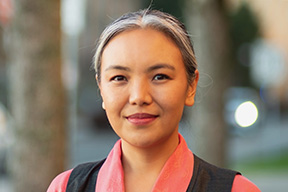
Dr Pasang Yangjee Sherpa
Assistant Professor, Department of Asian Studies & Institute of Critical Indigenous Studies
Dr. Sherpa is a Sharwa anthropologist from Nepal whose research, writing and pedagogy focuses on climate change and Indigeneity among Himalayan communities, guided by the question: How do we live in the midst of dying? She is currently involved in two collaborative projects: The first, titled Transnational Sherpas, investigates what it means to be a Sherpa today; the second seeks just pathways for sustainable futures in the Anthropocene, and includes critical reflections on how the Intergovernmental Panel on Climate Change can open up space for Indigenous peoples and local communities. Dr. Sherpa is jointly appointed to the Institute for Critical Indigenous Studies (home department) and the Department of Asian Studies.

Dr Bronwen Tate
Assistant Professor of Teaching & Undergraduate Chair, School of Creative Writing
Bronwen Tate is the author of the poetry collection The Silk the Moths Ignore, National Winner of the Hillary Gravendyk Prize. A citizen of the Chickasaw Nation, Bronwen earned an MFA in Literary Arts from Brown University and a Ph.D. in Comparative Literature from Stanford University. Bronwen is currently Undergraduate Chair in the School of Creative Writing at UBC, where she offers courses in poetry, creative nonfiction, literary translation, and the teaching of creative writing. In collaboration with UBC colleague John Vigna, Bronwen is co-writing a creative writing pedagogy book under contract with Bloomsbury Academic.

Dr Alice Te Punga Somerville
Professor & Head, Department of English Language and Literatures
Alice Te Punga Somerville (Māori – Te Āti Awa, Taranaki) is a scholar, poet and irredentist. Her MA (Auckland) and PhD (Cornell) focused on Māori written literatures. Her research and teaching engages texts in order to centre Indigenous expansiveness and de-centre colonialism. She is the author of Once Were Pacific: Maori connections to Oceania and 250 Ways to Write an Essay about Captain Cook (2020), and is working on a new book, ‘Writing the New World,’ as well as a forthcoming collection of poetry called Always Italicise: how to write while colonised. She serves on the editorial boards of several academic journals and is the editor of the Journal of New Zealand Literature. She has a teaching affiliation with the Institute for Critical Indigenous Studies.

Dr Richard Vedan
Associate Professor Emeritus & First Nations Advisor
Richard Vedan, Secwepemc, joined the UBC School of Social Work in 1995 and is former director of the First Nation House of Learning and Senior Advisor to the President on Aboriginal Affairs (2001-2008). His research addressed identity issues, authenticity, multi-generational traumatic stress disorder, violent behaviour in First Nations communities and the benefits of traditional healing practices. He retired on January 1st, 2014.
Faculty of Education
 Dr Cash Ahenakew
Associate Professor, Department of Educational Studies; Canada Research Chair in Indigenous Peoples’ Well-being
Dr. Cash Ahenakew (Ph.D.) holds a Canada Research Chair in Indigenous Peoples’ Well-being. Cash is Plains Cree and a member of the Ahtahkakoop Cree Nation. His research is based in a commitment to the development of Indigenous theories, curriculum, pedagogies and mixed methodologies. His work addresses the complexities at the interface between Indigenous and non-Indigenous knowledges, education, methodology and ceremony.
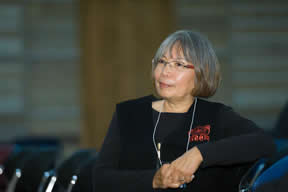
Dr Jo-Ann Archibald
Professor Emeritus, Education
Dr Archibald (Sto:lo), formerly the director of the First Nations House of Learning and the Indigenous Teacher Education Program (NITEP), and former Associate Dean for Indigenous Education in the Faculty of Education, retired in 2017.

Dr Peter Cole
Associate Professor, Department of Curriculum and Pedagogy
Dr Cole is a member of the Douglas First Nation (Southern Stl’atl’imx) as well as having Welsh/Scottish heritage. He has considerable experience as a researcher and educator in Indigenous education, with expertise in curriculum theory, Indigenous epistemology and pedagogy, research methodology, traditional indigenous technologies, and Indigenous perspectives in environmental and sustainability education.

Dr Janice Forsyth
Professor, Indigenous Land-Based Physical Culture and Wellness, School of Kinesiology
Janice Forsyth is a member of the Ochekwi-Sipi Nation (Fisher River Cree), Treaty No. 5, in southern Manitoba, though grew up off-reserve in Northern Ontario. Her research program focuses on decolonizing Indigenous physical culture. She is the author of Reclaiming Tom Longboat: Indigenous Self-Determination in Canadian Sport, and co-editor of Decolonizing Sport (2023) and Aboriginal Peoples in Canadian Sport: Historical Foundations and Contemporary Issues (2013).

Dr Candace Kaleimamoowahinekapu Galla
Associate Professor, Language and Literacy Education & First Nations and Endangered Languages Program
Growing up in a sugar plantation town in Kaʻū, Dr Galla was exposed to an array of languages and cultures from a young age and continued learning about her Hawaiian language and culture formally at Kamehameha Schools on Kapālama campus in Honolulu. She went on to study Linguistics at the University of Arizona and received a PhD in Language, Reading and Culture. Her research explores what types of technology initiatives Indigenous language communities are using to revitalize, maintain, and promote their language.
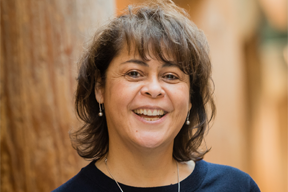
Dr Jan Hare
Professor, Language and Literacy Education; Dean, Faculty of Education
Jan Hare is an Anishinaabe scholar and educator from the M’Chigeeng First Nation, located in northern Ontario. She has sought to transform education in ways that are more inclusive of Indigenous ways of knowing and languages. Her research is concerned with improving educational outcomes for Aboriginal/Indigenous learners by centering Indigenous knowledge systems within educational reform from early childhood education to post-secondary, recognizing the holistic and multidisciplinary nature of Indigenous education. Jan was appointed Dean of the Faculty of Educaion in 2024.

Dr Margaret Kovach
Professor, Department of Educational Studies
Dr Kovach (Sakewew p’sim iskwew) is of Nêhiyaw and Saulteaux ancestry from Treaty Four, Saskatchewan. She is the author of the book Indigenous Methodologies: Characteristics, Conversations, and Contexts. Her teaching interests include Indigenous research methodologies, Indigenous adult and higher education, and anti-oppressive teacher education. Her research is in the area of Indigenous higher education and explores ways in which Canadian universities can cultivate environments that enhance the experience for Indigenous scholars and graduate students.
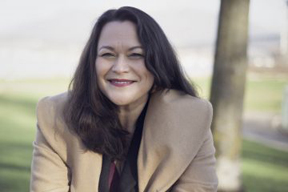
Dr Shannon Leddy
Associate Professor, Department of Curriculum and Pedagogy
A member of the Metis Nation of BC with Irish heritage, Dr Leddy is a Vancouver-based teacher and writer whose practice focuses on decolonizing education and Indigenous education within teacher education. Her PhD research at Simon Fraser University focused on inviting pre-service teachers into dialogue with contemporary Indigenous art as a mechanism of decolonizing education and in order to help them become adept at delivering Indigenous education without reproducing colonial stereotypes.

Dr Melanie Nelson
Assistant Professor, School and Applied Child Psychology, Counselling Psychology
A proud Samahquam (St’at’imc) woman, Dr Nelson is an Assistant Professor in the School and Applied Child Psychology program. Dr Nelson’s research focuses on the experiences of Indigenous caregivers within Western systems, including the assessment and diagnosis process, despite the absence of the construct of disability in traditional thought.
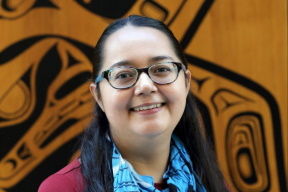
Dr Johanna Sam
Associate Professor, Human Development, Learning, and Culture & NITEP
Dr Johanna Sam, Tŝilhqot’in, offers expertise in adolescent development, technology, and Indigenous ways of knowing and teaches across two programs: Human Development, Learning, and Culture and Indigenous Teacher Education Program (NITEP). As a culturally responsive educator, she contributes in diverse areas that include: Indigenous teacher education, social justice, curriculum and pedagogy, and enhancing undergraduate students’ learning experience.
Faculty of Forestry & Environmental Stewardship
 Dr Tara Atleo
Assistant Professor, Department of Forest Resources Management
Dr. Tara Atleo, haḥuuła, is a stewardship economics researcher and Indigenous sustainable development practitioner from the Ahousaht First Nation, house of ƛaqišpiił. She is passionately committed to the principles of stewardship, dedicating her work to exploring innovative approaches to upholding and advancing Indigenous law and governance, including the intersection of economic considerations as elements of sustainable development and natural resource management. Grounded in her community roots, Tara uses her perspective to challenge and expand economic thought and tools to create opportunities for communities that advance efforts towards intergenerational equity.
 Dr Warren Cardinal-McTeague
Assistant Professor, Department of Forest and Conservation Sciences; Canada Research Chair in Indigenous Peoples, Governance & Environmental Relations
Dr Warren Cardinal-McTeague is Métis and Cree from the communities of Lac La Biche and Fort McMurray in northeastern Alberta and he is proudly gay, queer, and two-spirit. His research and teaching broadly encompasses plant biodiversity and Indigenous science. Currently, he is examining how Indigenous relationships with land (e.g., harvesting, gardening, fire stewardship) influence plant and microbial diversity and ecosystem health. Ultimately, his work aims to affirm Indigenous self-governance and agency in scientific research and education. He is a faculty member of the Summer internship for INdigenous peoples in Genomics (SING) Canada (https://sing-canada.ca) and is interested in blending art, culture, and science into his teaching and community engagement.
 Dr Jennifer Grenz
Assistant Professor, Department of Forest Resources Management
Jennifer has a B.Sc in Agroecology and a PhD in Integrated Studies in Land and Food Systems from UBC. Her scholarly interests revolve around invasive species management, ecological restoration, and science communication, and she brings with her nearly two decades of experience providing consulting services and on-the-ground management of invasive species for all levels of government, including working with Indigenous communities on creating food security plans and land healing initiatives. Jennifer is a proud Nlaka‘pamux woman of mixed ancestry whose family comes from the Lytton First Nation (though she grew up on the coast of BC).
 Dr Kimberly Yazzie
Assistant Professor, Department of Forest and Conservation Sciences & Center for Indigenous Land Stewardship
Dr. Yazzie is Diné and an enrolled member of the Navajo Nation. Kim’s research areas are in freshwater ecology and climate solutions. She earned her Ph.D. in Aquatic and Fishery Sciences from the University of Washington. Prior to joining UBC, Kim was a postdoctoral fellow at Stanford University at the Woods Institute for the Environment where she worked on climate mitigation and energy transformation in Tribal communities in the U.S. At UBC, Kim leads research on ecosystem resilience in freshwater systems and Indigenous land stewardship.
More on Dr Yazzie
Faculty of Land and Food Systems
 Dr Eduardo Jovel
Associate Professor, Applied Biology; Director, Indigenous Research Partnerships
Dr Jovel, whose traditional name is Itz Cohuatl, is an Indigenous scholar of Pipil and Mayan ancestry. His academic training includes Ethnobotany, Mycology, and Natural Products Chemistry. His research intersects with Indigenous Health and Wellness, Indigenous land-based Education, Gender, Research Ethics, and Indigenous food sovereignty. He is the founder and Director of xwc̓ic̓əsəm Garden at UBC Farm, focusing on restoring community leadership on self-determined land-based education and research, and, respectfully, mobilization of Indigenous knowledge. Dr. Jovel has worked with Indigenous people in Peru, Ecuador, the United States, New Zealand, Mexico, and Canada.
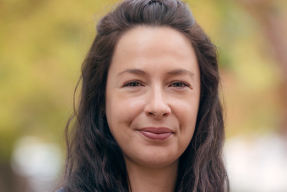 Dr Tabitha Robin
Assistant Professor, Applied Biology
Tabitha Robin is a mixed ancestry Métis and Cree researcher, educator, and writer. She obtained her PhD in Interdisciplinary Studies at the University of Manitoba. Her research explores the processes and practices of Indigenous food systems, particularly factors that affect Indigenous peoples’ food sovereignty. Her current research includes how Indigenous knowledges can be used as food literacy; the reclamation of Indigenous seed knowledges; practices of love and care for the land; and Indigenous land-based education and wellness.
Faculty of Medicine
 Dr Nadine Caron
Associate Professor, Dept. of Surgery; Co-Director, Centre for Excellence in Indigenous Health
Dr Nadine Caron, Associate Professor, Faculty of Medicine, Department of Surgery, teaches at the Northern Medical Program at the University of Northern British Columbia. She currently resides in Prince George, BC where she is a general and endocrine surgeon at the Prince George University Hospital. She is passionate about Indigenous peoples’ health and Canadian health policy. Nadine is Anishnawbe from the Sagamok First Nation.
 Dr Holly Reid
Assistant Professor, Occupational Science and Occupational Therapy
Upon completing a doctoral study that explored the intersectional experiences of 2S/LGBTQ+ Indigenous Peoples in BC, Holly, who is a member of the Métis Nation of BC, joined the OSOT department in 2026. Their research focuses on how everyday occupations, and those perhaps less commonly included in conversations surrounding occupation, shape identities, community engagement and health. They are particularly interested in the experiences of 2S/LGBTQIA+ populations, Indigenous health and well-being, and exploring how occupational therapy can respond to inequities experienced by marginalized communities.
 Dr Shannon Waters
Clinical Assistant Professor, SPPH, Epidemiology, Biostatistics and Public Health Practice
Dr Shannon Waters, Stz’uminus First Nation, completed UBC’s First Nations Family Practice program and completed specialty training in Public Health and Preventive Medicine. In addition to working as a family doctor, she has worked as Director of Health Surveillance, First Nations and Inuit Health Branch; Acting Senior Medical Officer, Vancouver Island Region, First Nations Health Authority; Medical Director, Vancouver Island Health Authority; and Aboriginal Physician Advisor, Ministry of Health. She is currently a local Medical Health Officer with the Vancouver Island Health Authority.
Faculty of Science
 Dr Shandin Pete
Assistant Professor of Teaching, Dept. of Earth, Ocean and Atmospheric Sciences
Dr. Shandin Pete was raised in Nłq̓alqʷ (“Place of the thick trees”, Arlee, Montana). His mother is from the Bitterroot Band of Salish in Montana and his father is Diné from Beshbihtoh Valley in Arizona. He is a hydrogeologist and science educator with interest in Indigenous research methodologies, geoscientific ethnography, Indigenous astronomy, social-political tribal structures, culturally congruent instructional strategies, and indigenous science philosophies. Most of his work in recent years has focused on community engagement to understand shifts in the Indigenous paradigm of research for science knowledge production. This work has included extensive collaboration with tribal knowledge holders across Native communities and Indigenous academic scholars at institutions nationally and internationally.
 Dr Andrea Reid
Assistant Professor, Institute for the Oceans and Fisheries; Canada Research Chair, Tier II, Indigenous Fisheries Science; Principal Investigator, Centre for Indigenous Fisheries
Dr Reid is a citizen of the Nisga’a Nation. Her research program adopts highly interdisciplinary and applied approaches to improving our understanding of the complex interrelationships between fish, people and place. Reid’s PhD in Biology (Governor General’s Gold Medal; Carleton University ’20) centered on multiple stressor effects on Pacific salmon, using tools and insights from Western and Indigenous sciences in tandem. Reid is a cofounder of Riparia, a Canadian charity that connects diverse young women with science on the water to grow the next generation of water protectors.
Peter A. Allard School of Law
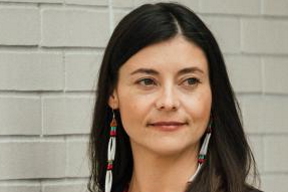 Ms Patricia M. Barkaskas
Associate Professor, Law
Patricia M. Barkaskas is Métis from Alberta. Her work examines the intersections of justice and law, with an emphasis on the experiences of Indigenous peoples, and disrupting the normative violence of colonial legal education. Her research focuses on Indigenous laws, access to justice for Indigenous peoples, decolonizing and Indigenizing law, and using Indigenous pedagogies in experiential learning and skills-based legal education and training. She currently teaches in the areas of Indigenous and Aboriginal laws, including Métis law, family law, and Indigenous and feminist legal theory.
 Ms Jessica Buffalo
Assistant Professor; Academic Director, Indigenous Community Legal Clinic
Jessica is from Samson Cree Nation/Nipisikohpahk. Her Cree/nehiyawak name is Bear Woman. She obtained her Juris Doctor from Peter A. Allard School of Law in 2016 and was called to the Alberta Bar in 2017. In private practice, she focused on criminal defence for Indigenous and marginalized people and played a pivotal role in establishing the Calgary Indigenous Court, including contributing to the development of the Edmonton Indigenous Court. In 2022, she moved to the Law Society of Alberta as Indigenous Initiatives Counsel, where she led initiatives aimed at advancing the TRC’s Call to Action 27, inter alia. She has presented at many conferences, panels, and webinars on building competencies in working with Indigenous peoples within the justice system, including guest lecturing at universities, as well as having developed intercultural competency courses for both Legal Aid Alberta and the Law Society of Alberta.
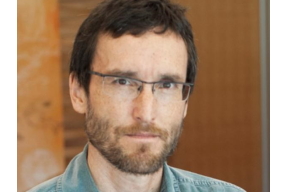
Dr Gordon Christie
Professor Emeritus, Law
Dr Christie taught in universities in Canada and the United States, including the Faculties of Law and Departments of Philosophy and Indigenous Studies. While an Assistant Professor at Osgoode Hall Law School (1998-2004), he acted as Director of the Intensive Program in Aboriginal Lands, Resources and Governments. Dr Christie’s research fields included Aboriginal legal issues, legal theory, and tort. His ancestry is Inupiat/Inuvialuit.
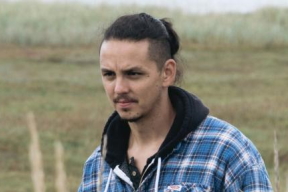
Dr Robert (YELḰATŦE) Clifford
Assistant Professor, Aboriginal & Indigenous Law; Co-Academic Director, Indigenous Legal Studies
Robert, or YELḰATŦE, is WSÁNEĆ and a member of the Tsawout First Nation. His PhD research utilized community participation methodologies to explore the ways WSÁNEĆ laws are generated by and reflect the values, philosophies, lands, and worldviews of the WSÁNEĆ people. His publications cover a range of aspects relating to Indigenous law and Indigenous legal theory, including on legal pluralism, Indigenous language revitalization, and Indigenous spirituality.

Mr Scott Franks
Assistant Professor, Law (PhD in-progress)
Scott Franks is a citizen of the Manitoba Métis Federation and is from northern Saskatchewan. His doctoral research (University of Ottawa) investigates the judicial construction of Métis legal identity in the Alberta Métis settlements. His LLM research investigated barriers and opportunities to the implementation of the Truth and Reconciliation Commission’s Calls to Action in law schools. He clerked for the Honorable Madam Justice Andromache Karakatsanis at the Supreme Court of Canada and practiced at Olthuis Kleer Townshend L.L.P., a national Indigenous rights law firm. He has a juris doctor from Osgoode Hall Law School. Prior to Allard, Franks was a member of the inaugural faculty of the Lincoln Alexander School of Law at Toronto Metropolitan University.
More on Mr Franks

Ms Andrea Hilland
Assistant Professor, Law
Andrea Hilland, KC, is a member of the Nuxalk Nation. Her research examines the intersections of Indigenous laws, Aboriginal rights, and environmental regulation to challenge discriminatory theories of colonial supremacy and Indigenous inferiority that are perpetuated through the contemporary colonial legal system. Key objectives of her research are to support the resurgence of Indigenous laws and to demonstrate the potential of Indigenous laws to enhance Canada’s multi-juridical legal system. She was appointed King’s Counsel in 2021.
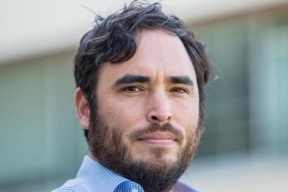
Dr Johnny Mack
Associate Professor, Law; Co-Academic Director, Indigenous Legal Studies; Academic Director, Indian Residential School History and Dialogue Centre
Professor Johnny Mack is from the Toquaht Nation (Nuu-chah-nulth). From 2014-2018 he was jointly appointed across First Nations and Indigenous Studies and Allard Law at UBC. His research investigates the legal relationship between Indigenous and settler peoples in contemporary settler states, particularly Canada, as well as Indigenous constitutionalism, subjectivity, critical theory, and legal pluralism. He was appointed Academic Director of the Indian Residential School History and Dialogue Centre in 2025.
UBC Library
 Ms Karleen Delaurier-Lyle
Information Services Librarian, Xwi7xwa Library
Karleen is Anishinaabe (Ojibwe, Swampy Cree) with mixed settler ancestry, and a member of the Berens River First Nation. She was born and raised on the unceded, ancestral, and traditional territory of the Syilx/Okanagan People. She completed her BA in Indigenous Studies and Gender and Women’s Studies at UBCO and earned her Master’s in Library and Information Studies at UBC Vancouver.
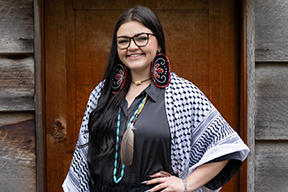 Taya Jardine
Indigenous Metadata Librarian, Xwi7xwa Library
Taya is a two spirit Mi’gmaw e’pit and member of Natoaganeg First Nation. They were raised both in their homelands and in Nisenan territory. She received her BA in Cultural Studies, minoring in Indigenous Studies, from UBC Okanagan and her MLIS in the First Nations Curriculum Concentration from UBC Vancouver. Their professional and academic work focuses on Indigenous librarianship, modes of Indigenous knowledge production, and representations of Indigenous Peoples and Knowledges within libraries.
More on Taya
 Ms Kayla Lar-Son
Interim Head, Xwi7xwa Library
Kayla Lar-Son is a member of the Metis Nation of Alberta, with mix Ukrainian heritage, and is originally from Tofield, Alberta. She holds a BA in Native Studies from the University of Alberta, 2016, and an MLIS from the University of Alberta, 2018. Her research interests are Indigenous librarianship, data sovereignty, Indigenous Knowledge transmission, and critical librarianship. As interim head, she oversees the operation and direction of Xwi7xwa Library.
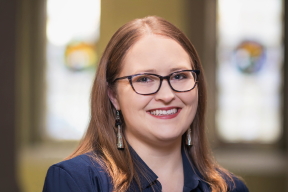 Ms Sarah Dupont
Librarian, UBC Library
Ms. Dupont, Métis, is from Prince George, BC and an alumnus of the University of Northern BC. She received a Masters of Library and Information Studies at the University of Alberta, where her research interests focused on information seeking behaviours of urban Métis youth.
Indian Residential School History and Dialogue Centre
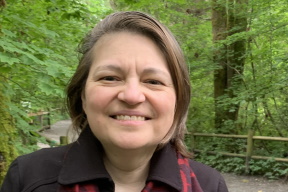 Ms Kim Lawson
Research and Community Liaison Librarian, IRSHDC
Kim Lawson is a member of the Heiltsuk Nation. She has a Masters in Library and Information Studies from UBC iSchool, and has previously worked at Xwi7xwa Library. Her work at the IRSHDC focuses on education, community engagement and research, where she sees the interconnectedness of cultural humility and information services as Indigenous informatics.
Updated: July 22, 2026